














Aedes ACM 2025.1 is a specialized structural analysis software developed by Aedes for the specific needs of intervention analysis on masonry structures. It is designed for civil engineers to evaluate local interventions on existing masonry walls, ensuring compliance with Italian technical regulations. A key capability is its flexibility in combining various structural reinforcement methods in its sophisticated analysis routines.
Aedes ACM 2025.1 is a dedicated application for engineers focused on structural interventions in masonry buildings. Developed by Aedes, this software provides a focused environment for evaluating the impact of repairs and reinforcements on the safety and performance of existing masonry structures. Its primary function is to facilitate detailed analysis of specific interventions applied to masonry walls.
Key features include the ability to model and analyze various intervention techniques, assess mechanical behavior under different load conditions, and ensure that proposed solutions align with regulatory requirements. The software supports a range of analysis methodologies, allowing for thorough examination of structural integrity before and after interventions.
In civil engineering, Aedes ACM 2025.1 finds its primary application in the assessment and planning of structural interventions for masonry structures. This is particularly critical in regions with a significant prevalence of older masonry buildings, which often require evaluation for seismic retrofitting or reinforcement due to material degradation or changes in structural load requirements.
The software is instrumental in scenarios such as seismic evaluation, where understanding the displacement capacity and resistance of a building after an intervention is paramount. It also supports the planning and validation of masonry reinforcement projects, ensuring that upgraded structures meet current safety standards and performance expectations. The targeted nature of the analysis makes it suitable for detailed studies on specific structural elements or entire buildings.
Aedes ACM 2025.1 supports a range of analyses crucial for understanding the behavior of masonry structures undergoing interventions. These include detailed assessments of stiffness, which describes a structure’s resistance to deformation under load, and resistance analysis, which evaluates the ultimate limit state performance. The software allows engineers to predict how a masonry wall or system will react to applied forces, both before and after modifications.
Furthermore, the software facilitates the analysis of energy dissipation attributes, a critical factor in seismic performance evaluations. By simulating various scenarios, engineers can gain insights into the structural response, including its capacity to absorb and dissipate seismic energy, thereby contributing to a more comprehensive safety assessment.
A significant capability of Aedes ACM 2025.1 is its ability to analyze the combined effects of multiple intervention techniques applied simultaneously or sequentially. This allows engineers to explore complex retrofitting strategies that might involve various reinforcement methods.
For instance, an engineer can model a scenario involving both the application of reinforced plaster and the incorporation of additional structural framing. The software then evaluates the cumulative impact of these combined interventions on the overall stiffness, resistance, and seismic adaptation characteristics of the masonry structure, providing a holistic view of the structural improvement.
Aedes ACM 2025.1 is engineered to ensure that analyses and proposed interventions comply with applicable national technical regulations, specifically the standards established for Italy. This regulatory adherence is fundamental for structural intervention projects, guaranteeing that all assessments meet legal requirements for building safety.
The software aids in validating results against manual calculations, a common requirement for regulatory approval. By incorporating these checks, Aedes ACM 2025.1 helps engineers demonstrate that their proposed interventions for masonry walls not only enhance structural performance but also adhere strictly to prescribed safety evaluations and building codes.
In practical applications, Aedes ACM 2025.1 has been utilized to assess and plan interventions for masonry buildings in seismically active regions. For example, it has been employed in case studies to evaluate historical masonry structures requiring seismic retrofitting to meet modern safety standards while preserving architectural integrity.
Engineers use the software to quantify the expected improvements in stiffness and resistance resulting from techniques like reinforced plaster or the addition of new structural elements. This allows for informed decision-making regarding repair strategies, contributing to enhanced building safety and structural integrity, especially in areas prone to earthquakes or requiring significant structural upgrades.
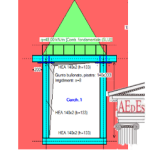
Aedes ACM 2025.1 allows users to analyze various types of interventions, including the addition of reinforced concrete or steel frames, as well as techniques like reinforced plaster application. This multifaceted approach enables comprehensive assessments of structural integrity.
Aedes ACM 2025.1 is designed to comply with the National Technical Regulations applicable in Italy, ensuring that all interventions on masonry walls meet established safety standards. The software includes validation procedures to compare results with manual calculations, reinforcing its regulatory adherence.
Aedes ACM 2025.1 enhances masonry building safety assessments by offering detailed analysis of stiffness, resistance, and energy dissipation attributes of structures. By evaluating various scenarios and intervention types, users can accurately classify interventions as repair, improvement, or seismic adaptations.