












COSMOlogic TURBOMOLE 7.4 is a quantum chemistry software package developed by TURBOMOLE GmbH, with its origins tracing back to the University of Karlsruhe. It is utilized for large-scale molecular simulations in chemistry, serving professionals in fields such as heterogeneous and homogeneous catalysis, organic and inorganic chemistry, and biochemistry. A key differentiator is its efficient implementation of electronic structure methods, including density functional theory and coupled cluster theory, alongside novel algorithms for enhanced computational speed.
TURBOMOLE is a comprehensive suite of programs designed for performing high-level quantum chemical calculations. Initially developed to provide efficient computational tools for theoretical chemistry, it has evolved into a sophisticated package favored for its performance and reliability. The software implements a variety of electronic structure methods, enabling detailed investigation of molecular properties and reactions. Its development lineage, starting with Prof. Reinhart Ahlrichs’ group, underscores a long-standing commitment to advancing computational chemistry.
The software’s significance in the field of quantum chemistry stems from its robust implementation of established theoretical models and its continuous innovation in algorithmic efficiency. This focus allows researchers to tackle increasingly complex molecular systems and perform simulations that were previously computationally prohibitive. TURBOMOLE provides a stable foundation for exploring chemical phenomena at the atomic and electronic level.
TURBOMOLE supports a broad spectrum of electronic structure methods essential for modern quantum chemistry research. This includes foundational approaches like the Hartree-Fock (HF) method, enabling the calculation of electron-electron repulsion implicitly. Density functional theory (DFT) calculations are also a core capability, offering a computationally tractable route to approximate the exchange-correlation energy.
For more accurate single-reference systems, TURBOMOLE implements various correlated methods, including Møller–Plesset perturbation theory (MP2) and coupled cluster theory. The CCSD(T) (Coupled Cluster Singles Doubles with perturbative Triples) method is available, representing a benchmark for high-accuracy calculations on moderate-sized molecular systems. The software generally employs Gaussian basis sets to represent atomic orbitals in these calculations.
The software is engineered to handle both ground state and excited state electronic structure calculations. Geometric optimization capabilities allow for the determination of stable molecular geometries and transition states, which are critical for understanding reaction pathways and molecular stability. This functionality is complemented by molecular dynamics simulations, providing insights into the temporal evolution of molecular systems.
TURBOMOLE’s features extend to the calculation of spectroscopic properties. It can predict infrared (IR) absorption spectra and UV/Vis absorption spectra, enabling direct comparison with experimental data. Furthermore, the package facilitates calculations relevant to excited states, such as time-dependent density functional theory (TD-DFT) for predicting excitation energies and oscillator strengths.
A defining characteristic of TURBOMOLE is its emphasis on computational efficiency, achieved through the implementation of specialized algorithms. These innovations are designed to reduce the computational cost associated with large-scale quantum chemical simulations, making it feasible to study more extensive molecular systems and complex processes. The software’s algorithmic design contributes significantly to its performance.
These performance enhancements are particularly evident in the calculation of energy gradients and Hessians, which are crucial for optimization and vibrational analysis. By optimizing these calculations, TURBOMOLE enables researchers to obtain results faster, thereby accelerating the pace of scientific discovery in computational chemistry and related fields.
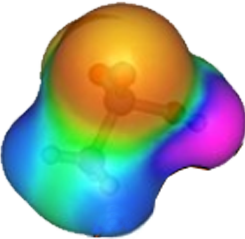
TURBOMOLE integrates the COSMO (COnductor-like Screening MOdel) solvation model, providing a powerful tool for simulating the effects of solvents on molecular properties. The COSMO model offers a continuum approach to solvation, treating the solvent as a polarizable dielectric medium surrounding the solute molecule. This approach avoids the need for explicit solvent molecules, significantly reducing computational cost for solvation studies.
The implementation within TURBOMOLE allows chemists to accurately predict how solute properties, such as reaction energies, electronic spectra, and molecular conformations, are influenced by their surrounding solvent environment. This is particularly valuable for understanding chemical reactions in solution, designing new pharmaceuticals, and studying biochemical processes where solvent interactions play a critical role.
To enhance usability, TURBOMOLE offers an integrated graphical user interface named TmoleX. This interface provides a visual environment for setting up calculations, managing input files, and visualizing results. TmoleX aims to streamline the workflow for chemists who may not be experts in computational programming detailed command-line protocols.
The TmoleX interface facilitates tasks such as building molecular geometries, selecting computational methods and basis sets, and initiating calculations directly from a graphical environment. Additionally, it offers tools for visualizing molecular structures, electron densities, and computational output, making the interpretation of complex quantum chemical results more accessible.
COSMOlogic TURBOMOLE is widely applied across various domains of chemical research due to its versatility and efficiency. In the field of catalysis, researchers use the software to model reaction mechanisms on catalytic surfaces and in solution, helping to design more efficient catalysts for industrial processes. This includes investigations into both heterogeneous and homogeneous catalysis.
Its capabilities extend to biochemistry and material science. For instance, TURBOMOLE can be employed to study the electronic and structural properties of biomolecules, aiding in drug discovery and understanding of biological mechanisms. In material science, it assists in the development of new materials with specific electronic or optical properties by simulating molecular and bulk characteristics. The software plays a crucial role in predicting spectroscopic data, assisting in the characterization of novel compounds.
COSMOlogic TURBOMOLE supports a wide range of calculations, including ground state and excited state computations using methods like Hartree-Fock, DFT, and coupled cluster methods. It is capable of handling geometric optimization, molecular dynamics, and provides functionalities for calculating various properties such as IR, UV/Vis spectra and more.
The COSMO model in TURBOMOLE allows chemists to simulate solvation effects by considering the solvent environment in quantum calculations, which enhances the predictive power of molecular properties. This integration helps in understanding interactions in both homogeneous and heterogeneous systems.
COSMOlogic TURBOMOLE is designed with a focus on computational efficiency and stability, which allows it to handle large-scale simulations effectively. Its unique combination of electronic structure methods and the adoption of specialized algorithms provides a distinctive edge in performance over many alternatives.