

Latest update
License Price
OS
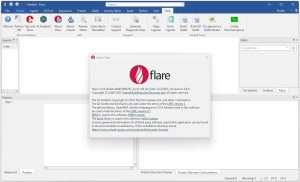
Cresset-BMD Flare is an advanced computational chemistry platform that integrates ligand-based and structure-based drug design methodologies into a unified, intuitive environment. Developed by Cresset Biomolecular Modeling and Design (BMD), Flare leverages proprietary field-based technology to provide unprecedented insight into molecular interactions, electrostatic properties, and structure-activity relationships.
Version 11.0.2 continues Cresset’s mission of bridging the gap between computational chemistry and medicinal chemistry intuition—enabling researchers to visualize, analyze, and optimize molecular interactions with accuracy and efficiency. From detailed protein-ligand interaction analysis to predictive QSAR modeling, from scaffold hopping to electrostatic similarity comparisons, Flare delivers the sophisticated tools that modern drug discovery demands.
Flare 2026
This professional computational chemistry software is designed for:
Computational Chemists & Molecular Modelers in pharmaceutical research and drug discovery.
Medicinal Chemists & Drug Designers optimizing lead compounds and understanding structure-activity relationships.
Biochemists & Structural Biologists studying protein-ligand interactions and molecular recognition.
Academic Researchers & Graduate Students investigating molecular mechanisms and conducting virtual screening.
Biotechnology R&D Teams accelerating drug discovery pipelines through computational approaches.
Proprietary Field Technology:
Molecular fields represent electrostatic, steric, and hydrophobic properties
More informative than atom-based representations
Captures the “molecular personality” that drives biological activity
Enables accurate comparison and alignment based on field similarity
Field Points:
Visual representation of key interaction regions
Positive and negative electrostatic potentials
Hydrophobic and van der Waals interaction zones
Intuitive visualization of molecular recognition features
Interactive 3D Environment:
Real-time manipulation of protein and ligand structures
Smooth rotation, zooming, and panning
Multiple rendering styles (surface, ribbon, wireframe, CPK)
Side-by-side comparison of multiple structures
Electrostatic Visualization:
Color-coded electrostatic potential maps
Positive (blue) and negative (red) regions clearly displayed
Surface property rendering
Interactive probing of electrostatic features
Field Visualization:
Field point display for ligands and binding sites
Field contour surfaces
Comparative field displays for similarity analysis
Real-time field calculation and update
Molecular Alignment:
Field-based alignment of compound libraries
Shape-based similarity searching
Electrostatic similarity comparison
Automated alignment of multiple ligands
Scaffold Hopping:
Identify structurally diverse compounds with similar field properties
Discover novel chemotypes while retaining biological activity
Expand intellectual property space
Generate new lead series from known actives
Pharmacophore Modeling:
Generate pharmacophore hypotheses from active compounds
3D pharmacophore creation and validation
Database searching for pharmacophore matches
Visualize key interaction features
Activity Prediction:
Predict biological activity based on field similarity
Rank compound libraries by predicted activity
Identify promising candidates for synthesis
Prioritize compounds for screening
Protein Preparation:
Import structures from PDB or modeling sources
Add missing hydrogens and residues
Optimize hydrogen bonding networks
Protonation state assignment
Structure cleanup and validation
Ligand Docking:
Flexible ligand docking into protein binding sites
Multiple docking algorithms for accuracy
Pose generation and scoring
Interaction analysis and visualization
Binding Mode Analysis:
Detailed protein-ligand interaction diagrams
Hydrogen bonding and hydrophobic contact mapping
Electrostatic complementarity assessment
Solvent exposure and buried surface analysis
Pose Scoring & Ranking:
Multiple scoring functions for pose evaluation
Consensus scoring approaches
Binding affinity prediction
Rank-ordering of docking results
3D-QSAR Model Generation:
Create predictive models from activity data
Field-based QSAR using proprietary technology
Automatic model validation and statistics
Visual interpretation of model features
Model Application:
Predict activity of virtual compounds
Virtual screening of compound libraries
Activity cliff analysis
Structure-activity relationship visualization
Statistical Validation:
Cross-validation and external test set validation
Q², R², and other statistical metrics
Confidence estimates for predictions
Model applicability domain assessment
Structure Building:
Create and modify molecular structures
Add functional groups and substituents
Build combinatorial libraries
Edit bond orders and atom types
Geometry Optimization:
Energy minimization with force fields
Conformational analysis and sampling
Low-energy conformer generation
Strain energy assessment
Property Calculation:
LogP, molecular weight, and other physicochemical properties
TPSA and other ADME-related descriptors
Hydrogen bond donor/acceptor counts
Rotatable bond analysis
Project Management:
Organize compounds, proteins, and results
Track project history and decisions
Compare multiple designs and hypotheses
Share projects with collaborators
Batch Processing:
Automated analysis of compound libraries
Scriptable workflows for routine tasks
Command-line options for high-throughput
Integration with external tools
Data Export:
Export images for publications and presentations
Save results in standard chemical formats
Generate reports and summaries
Integration with cheminformatics platforms
Publication-Quality Graphics:
High-resolution image export
Customizable color schemes and styles
Annotated diagrams and interaction maps
Molecular graphics ready for presentations
Report Generation:
Automated creation of project reports
Tabulated results and summaries
Statistical analysis and model reports
Customizable report templates
Enhanced Field Technology – Faster field calculations with improved accuracy
Expanded Docking Capabilities – New algorithms for pose prediction and scoring
Improved QSAR Modeling – Better model statistics with enhanced validation tools
Protein Preparation Updates – Streamlined workflows with automated optimization
UI/UX Refinements – Modernized interface with customizable workspaces
Batch Processing Enhancements – Faster analysis of large compound libraries
Reporting Improvements – More flexible report generation options
Stability Enhancements – Bug fixes and reliability improvements
Windows: Windows 10 or 11 (64-bit)
macOS: Recent versions (as supported by release)
Linux: Various distributions (check specific release support)
Processor: Multi-core processor (Intel Core i5/i7 or equivalent recommended)
RAM: Minimum 8 GB (16 GB or more recommended for large datasets)
Storage: At least 10 GB free disk space
Graphics: Dedicated graphics card recommended for advanced visualization
Architecture: 64-bit required
Graphics: OpenGL-compatible graphics support
Installation: Administrative rights required
Price: 125 $
Price Currency: $
Operating System: Windows
Application Category: Biotechnology
Latest update
License Price
OS












Reviews
There are no reviews yet.