

Latest update
License Price
OS
Available versions: 13.5 , 13.0 , 12.5 , 11.0 , 10.0
Petroleum Experts (Petex) develop the Integrated Production Modelling software (IPM). IPM models the complete oil or gas production system including reservoir, wells and the surface network.
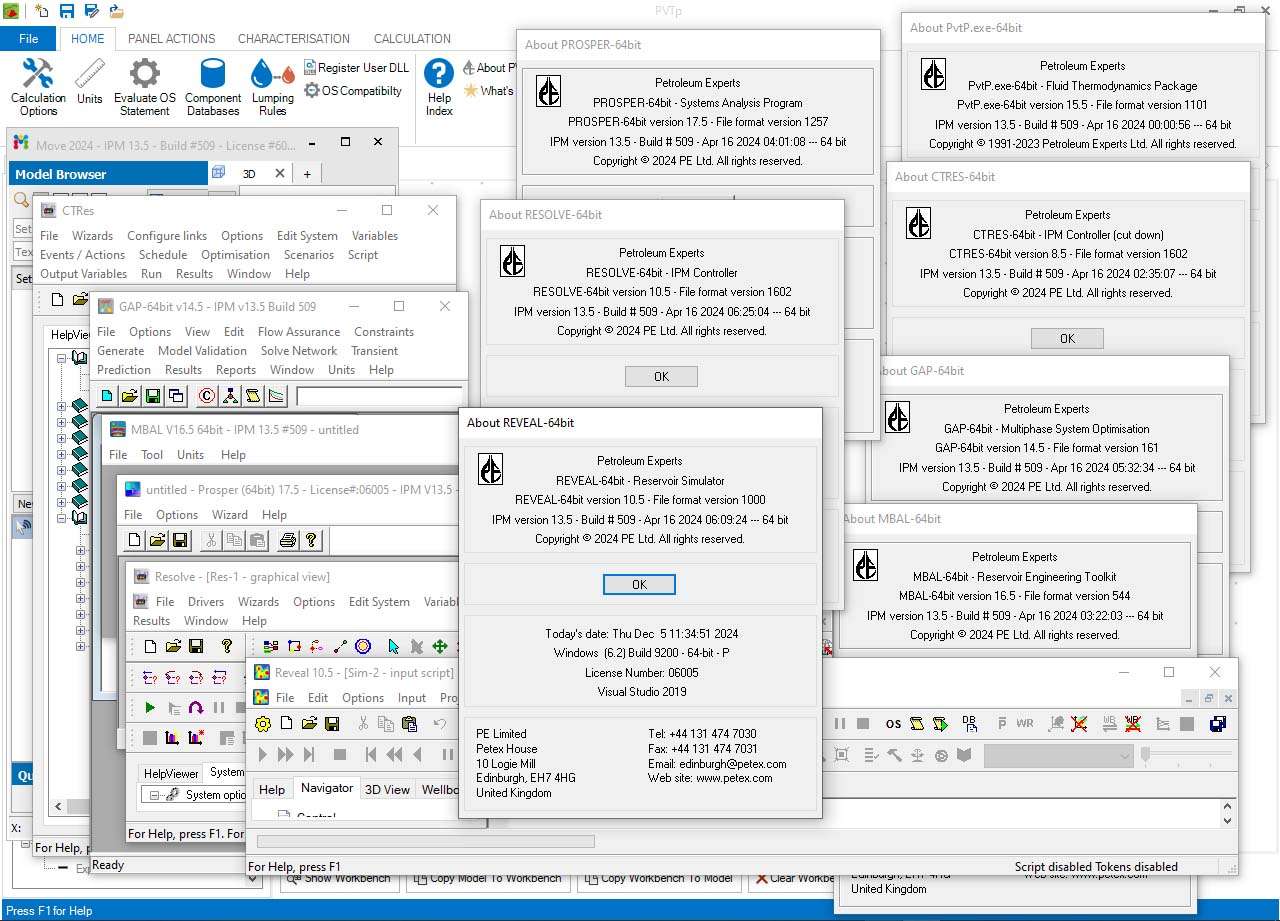
The IPM suite of tools: GAP, GAP TRANSIENT, PROSPER, MBAL, PVTP, REVEAL, RESOLVE , CTRES and MOVE can be run together seamlessly, allowing the engineer to design complete field models. The models can include the reservoir tanks, all the wells and the surface gathering system. IPM can model and optimise the production and the water or gas injection system simultaneously. With the Reservoir, Wells and Complete Surface Systems model completed and the production history matched, the production system can be optimised and production forecasts run.
The unique global optimisation approach permits the engineer to determine the optimum setting to maximum production or revenue, taking account of all constraints that are set in the system. These results can then be used to implement adjustments at the field level to achieve the optimisation goals.
There are literally several thousand fields worldwide having their production managed and optimised using IPM. All common naturally flowing well configurations, including multi-lateral, whether naturally flowing or with artificial lift can be modelled and optimised together.
With the use of RESOLVE and OpenServer the IPM approach has been extended to connecting the PETEX software to third party software such as Reservoir Simulators and Process Simulators. These products form a suite of complementary tools assisting engineers to improve their reservoir simulations by describing and modelling a production system more accurately.

GAP
Improvements in overall performance, parallelisation etc.
External Equipment Interface
Solver phase options
Outflow well ports
Bug fixes
PROSPER
Gauges can now be specified as boundary conditions
Improvements to the gradient calculation
Bifurcation possible
New results layout
Plotting improvements
Advanced thermal model added allow interaction between strings to be captured
Now possible to capture Joule-Thomson affects across valves
Possible to now apply a fixed dP or valve model to gaslift valves
ESP efficiency look up tables now added
Tandem ESP motors now available
Parallelisation now possible in System, Gradient and Inflow calculations
Bug fixes
RESOLVE
Data Objects
Added data science objects for R and Jupyter Python
Added GIS and Mapping Tool objects for GAP model building
Added RE-Studio Integration Reader and Viewer objects
SciKit PCA object added for Machine Learning
To allow Web Connectivity, the following objects were added/extended:
XML object added
Generic Web Client object added
Petroleum Experts Web Client object added
JSON object extended
MOVE Engine allowing MOVE to run non-GUI
Other Enhancements
Introduction of the Petroleum Experts Web Service
Continued enhancement of the MOVE-REVEAL connection for advanced integration
DataStores now support CSV formats
Now possible to use structured JSON data for GAP model building
Now possible to run IPM on the Schlumberger DELFI platform, where the IX and Eclipse drivers are integrated with ODRS
Implementation of semi-dynamic clustering, with work towards fully elastic clustering
A new plotting interface has been implemented
Improvements made to the archiving process
Extensive improvements to Visual Workflows in the domain of visualisation, exception handling and intellisense
General bug fixes
MBAL
Minor cosmetic changes
Bug fixes
PVTp
Ability to export and import wax related properties to and from IPM *.prp file format
Additional wax properties included
Now possible to tune fluids to wax appearance and amount data
Overall improvement to wax modelling
Bug fixes
REVEAL
Calculation improvements:
New linear solver default options implemented
Updated the non-overlap parallel solver
Added a GPU solver
Well modelling improvements:
Gradual opening/closing of valves/chokes over an interval for transient modelling
Can now add gauge depths to a well
Ability to place the well within the reservoir graphical
Screen/ICD velocity constraint added
Orifices in annulus and second/coiled tubing added
Transient 3-phase segregation model added
Experimental transient dispersion limiting model added
Transient max well time step added
Transient calculations available for all pipe segments including completed pipes
Can now schedule PI multipliers with respect to the original value
Improved coupling of solids trapping and filtercake models for crossflowing wells
Fracture modelling improvements:
Improved coupling to detailed wells for X-flow fracturing
Improved stress calculation with vertical pinchouts within refinement
Option to allow fracture cross flow for a no flow well
Delaunay fracture gridding option added
Absolute limits from linear fracture growth and shrinkage
Acid fracturing enhancements
Water Chemistry improvements:
Improved handling of redox reactions, for sulphate/sulphide with souring (pe tracking)
Option to use new Phreeq 3.6.2 engine added
H2, CH4, N2, O2, H2S, NH3 gas equilibrium now possible
Coupling improvements:
Poro- and thermos- stress reversibility now possible
Stress tensor added for grid and true alignment
Vertical K1C modifier added
Grid generation improvements:
Tartan grid extended to set model size
Actnum array added
Improved handling of pinchouts and faults within refined regions
Rock thermal expansion option added
Visualisation improvements:
Slider bar added to move through time in plots
Integrated vertical properties and delta for 3D visualisation
New 2D plotting interface
Fault improvements:
Faults defined by I,J column with width and permeability
Point cloud fault properties, width, permeability, hanging and foot wall throw change added
Interaction with MOVE extended
Relative Permeability improvements:
Extrapolated Corey method
Corey exponent endpoint scaling
Changed definition of Corey krog endpoint
Miscellaneous improvements:
Extra results added, e.g. 3d results, gauge results etc.
New OpenServer commands added
Simple Kriging and sequential Gaussian simulation now possible
Updated validation and warnings/errors
More general use of mask arrays for history matching
Wormhole model added
EOS modelling extended
Bug fixes
MOVE
MOVE 2022 is a part of the IPM 13 release:
New option for deploying MOVE with the rest of IPM, or separately on its own.
New option for installing the MOVE Tutorials and Tutorial examples.
Important for API and workflows that utilise both RESOLVE and MOVE.
MOVE 2022 introduces new ability to create 3D GeoCellular Volumes
Create 3D Grids as input for reservoir simulation (e.g. REVEAL)
The creation method will honour Faults.
New export Volume in REVEAL format
Improved MOVE import and export to/from ECLIPSE format
GeoCellular Volume Attributes are now saved in export formats
MOVE 2022 extends further the API for either RESOLVE or OPENSERVER
More MOVE tools exposed to the API.
MOVE 2022 introduces a brand new RESOLVE Data Object (RDO), MOVE Engine:
Access MOVE Data and operations – without GUI;
Compliments the existing API.
Improve performance and efficiency of RESOLVE workflows using MOVE.
Model Building improvements
Resample Tool and Surface with Boundaries Tool
Improvements in 2D Kinematic Modelling
Display of Thermal subsidence and burial history curves
2D Decompaction tool with polygons
Improvements in Fault Analysis
Extract Vshale input from a GeoCellular Volume, instead of Wells.
MOVE links to Petrel and GST updated to support latest versions
CTRES
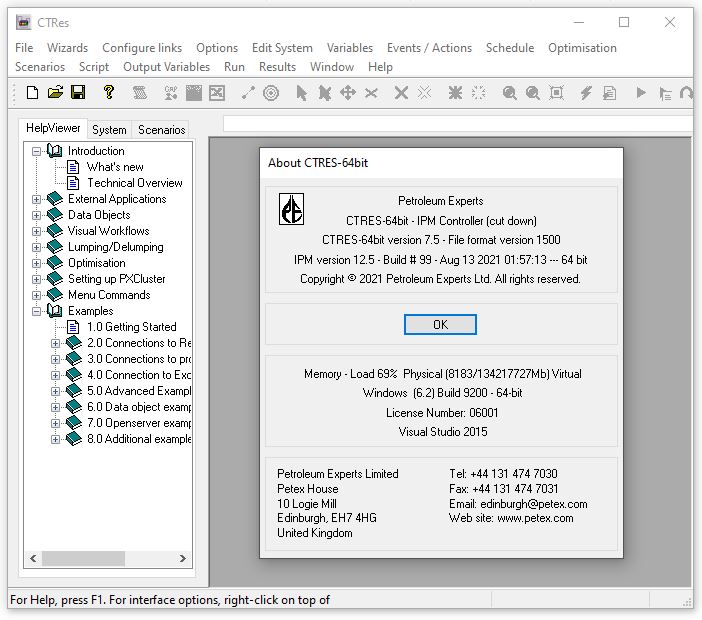
GAP
Improvements in overall performance, parallelisation etc.
External Equipment Interface
Solver phase options
Outflow well ports
Bug fixes
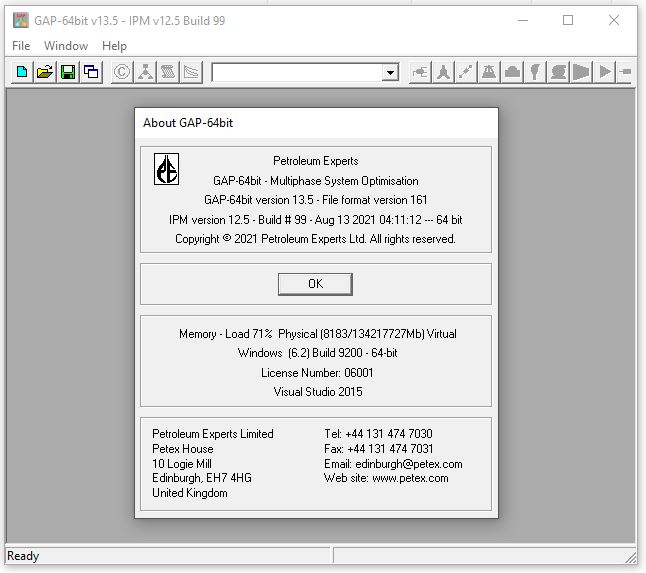
PROSPER
Gauges can now be specified as boundary conditions
Improvements to the gradient calculation
Bifurcation possible
New results layout
Plotting improvements
Advanced thermal model added allow interaction between strings to be captured
Now possible to capture Joule-Thomson affects across valves
Possible to now apply a fixed dP or valve model to gaslift valves
ESP efficiency look up tables now added
Tandem ESP motors now available
Parallelisation now possible in System, Gradient and Inflow calculations
Bug fixes

RESOLVE
Data Objects
Added data science objects for R and Jupyter Python
Added GIS and Mapping Tool objects for GAP model building
Added RE-Studio Integration Reader and Viewer objects
SciKit PCA object added for Machine Learning
To allow Web Connectivity, the following objects were added/extended:
XML object added
Generic Web Client object added
Petroleum Experts Web Client object added
JSON object extended
MOVE Engine allowing MOVE to run non-GUI
Other Enhancements
Introduction of the Petroleum Experts Web Service
Continued enhancement of the MOVE-REVEAL connection for advanced integration
DataStores now support CSV formats
Now possible to use structured JSON data for GAP model building
Now possible to run IPM on the Schlumberger DELFI platform, where the IX and Eclipse drivers are integrated with ODRS
Implementation of semi-dynamic clustering, with work towards fully elastic clustering
A new plotting interface has been implemented
Improvements made to the archiving process
Extensive improvements to Visual Workflows in the domain of visualisation, exception handling and intellisense
General bug fixes

MBAL
Minor cosmetic changes
Bug fixes

PVTp
Ability to export and import wax related properties to and from IPM *.prp file format
Additional wax properties included
Now possible to tune fluids to wax appearance and amount data
Overall improvement to wax modelling
Bug fixes

REVEAL
Calculation improvements:
New linear solver default options implemented
Updated the non-overlap parallel solver
Added a GPU solver
Well modelling improvements:
Gradual opening/closing of valves/chokes over an interval for transient modelling
Can now add gauge depths to a well
Ability to place the well within the reservoir graphical
Screen/ICD velocity constraint added
Orifices in annulus and second/coiled tubing added
Transient 3-phase segregation model added
Experimental transient dispersion limiting model added
Transient max well time step added
Transient calculations available for all pipe segments including completed pipes
Can now schedule PI multipliers with respect to the original value
Improved coupling of solids trapping and filtercake models for crossflowing wells
Fracture modelling improvements:
Improved coupling to detailed wells for X-flow fracturing
Improved stress calculation with vertical pinchouts within refinement
Option to allow fracture cross flow for a no flow well
Delaunay fracture gridding option added
Absolute limits from linear fracture growth and shrinkage
Acid fracturing enhancements
Water Chemistry improvements:
Improved handling of redox reactions, for sulphate/sulphide with souring (pe tracking)
Option to use new Phreeq 3.6.2 engine added
H2, CH4, N2, O2, H2S, NH3 gas equilibrium now possible
Coupling improvements:
Poro- and thermos- stress reversibility now possible
Stress tensor added for grid and true alignment
Vertical K1C modifier added
Grid generation improvements:
Tartan grid extended to set model size
Actnum array added
Improved handling of pinchouts and faults within refined regions
Rock thermal expansion option added
Visualisation improvements:
Slider bar added to move through time in plots
Integrated vertical properties and delta for 3D visualisation
New 2D plotting interface
Fault improvements:
Faults defined by I,J column with width and permeability
Point cloud fault properties, width, permeability, hanging and foot wall throw change added
Interaction with MOVE extended
Relative Permeability improvements:
Extrapolated Corey method
Corey exponent endpoint scaling
Changed definition of Corey krog endpoint
Miscellaneous improvements:
Extra results added, e.g. 3d results, gauge results etc.
New OpenServer commands added
Simple Kriging and sequential Gaussian simulation now possible
Updated validation and warnings/errors
More general use of mask arrays for history matching
Wormhole model added
EOS modelling extended
Bug fixes
MOVE
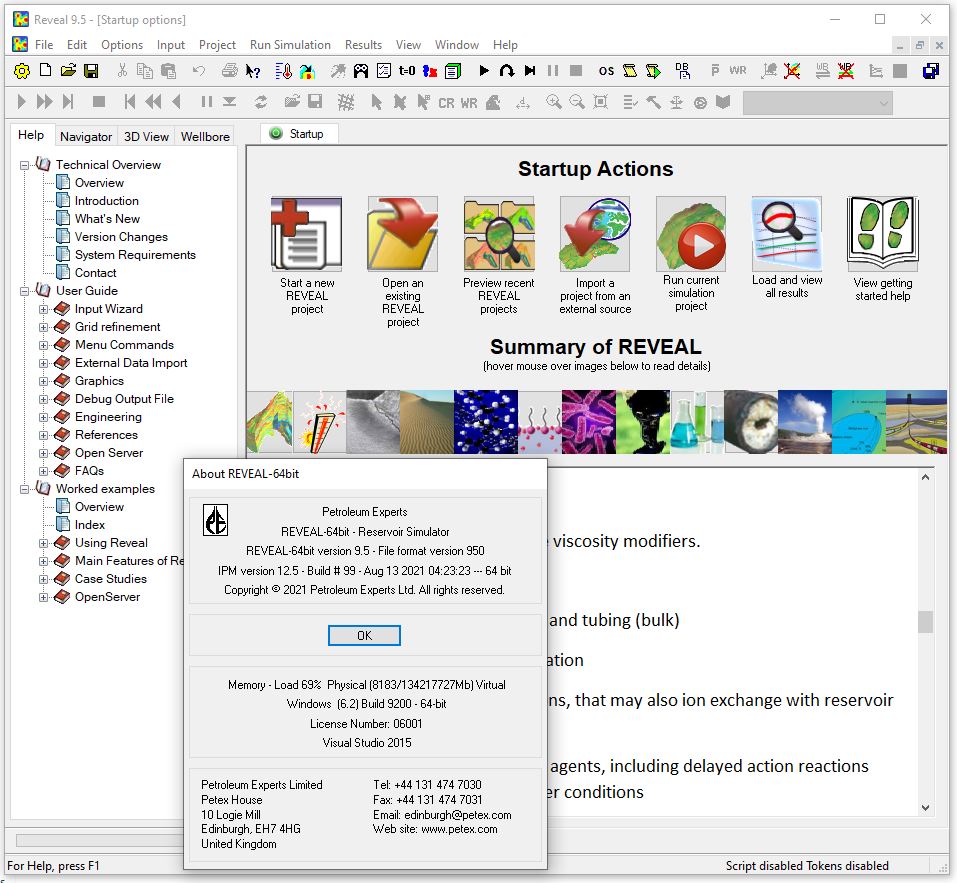
MOVE 2020 is a part of the IPM 12.5 release:
New option for deploying MOVE with the rest of IPM, or separately on its own.
New option for installing the MOVE Tutorials and Tutorial examples.
Important for API and workflows that utilise both RESOLVE and MOVE.
MOVE 2020 introduces new ability to create 3D GeoCellular Volumes
Create 3D Grids as input for reservoir simulation (e.g. REVEAL)
The creation method will honour Faults.
New export Volume in REVEAL format
Improved MOVE import and export to/from ECLIPSE format
GeoCellular Volume Attributes are now saved in export formats
MOVE 2020 extends further the API for either RESOLVE or OPENSERVER
More MOVE tools exposed to the API.
MOVE 2020 introduces a brand new RESOLVE Data Object (RDO), MOVE Engine:
Access MOVE Data and operations – without GUI;
Compliments the existing API.
Improve performance and efficiency of RESOLVE workflows using MOVE.
Model Building improvements
Resample Tool and Surface with Boundaries Tool
Improvements in 2D Kinematic Modelling
Display of Thermal subsidence and burial history curves
2D Decompaction tool with polygons
Improvements in Fault Analysis
Extract Vshale input from a GeoCellular Volume, instead of Wells.

Price: 145 $
Price Currency: $
Operating System: Windows
Application Category: Oil & Gas Engineering
Latest update
License Price
OS









Ramlih –
This software is very help for my analysis of well, i hope can get this software update. Thank you