
Polar Instruments Speedstack is a comprehensive PCB stackup design and management software that works alongside Si9000e. It provides a complete environment for designing, analyzing, and documenting PCB stackups with controlled impedance requirements. Speedstack enables engineers to create optimal stackup designs that balance electrical performance, manufacturability, and cost, while ensuring impedance targets are met throughout the fabrication process.
Speedstack serves professionals involved in PCB stackup design:
PCB Design Engineers planning complex multilayer board stackups
Signal Integrity Engineers optimizing stackups for high-speed performance
EDA Librarians creating and managing stackup libraries
PCB Fabrication Engineers evaluating manufacturability and cost
Technical Managers overseeing PCB design standards and processes
Academic Instructors teaching PCB design and manufacturing
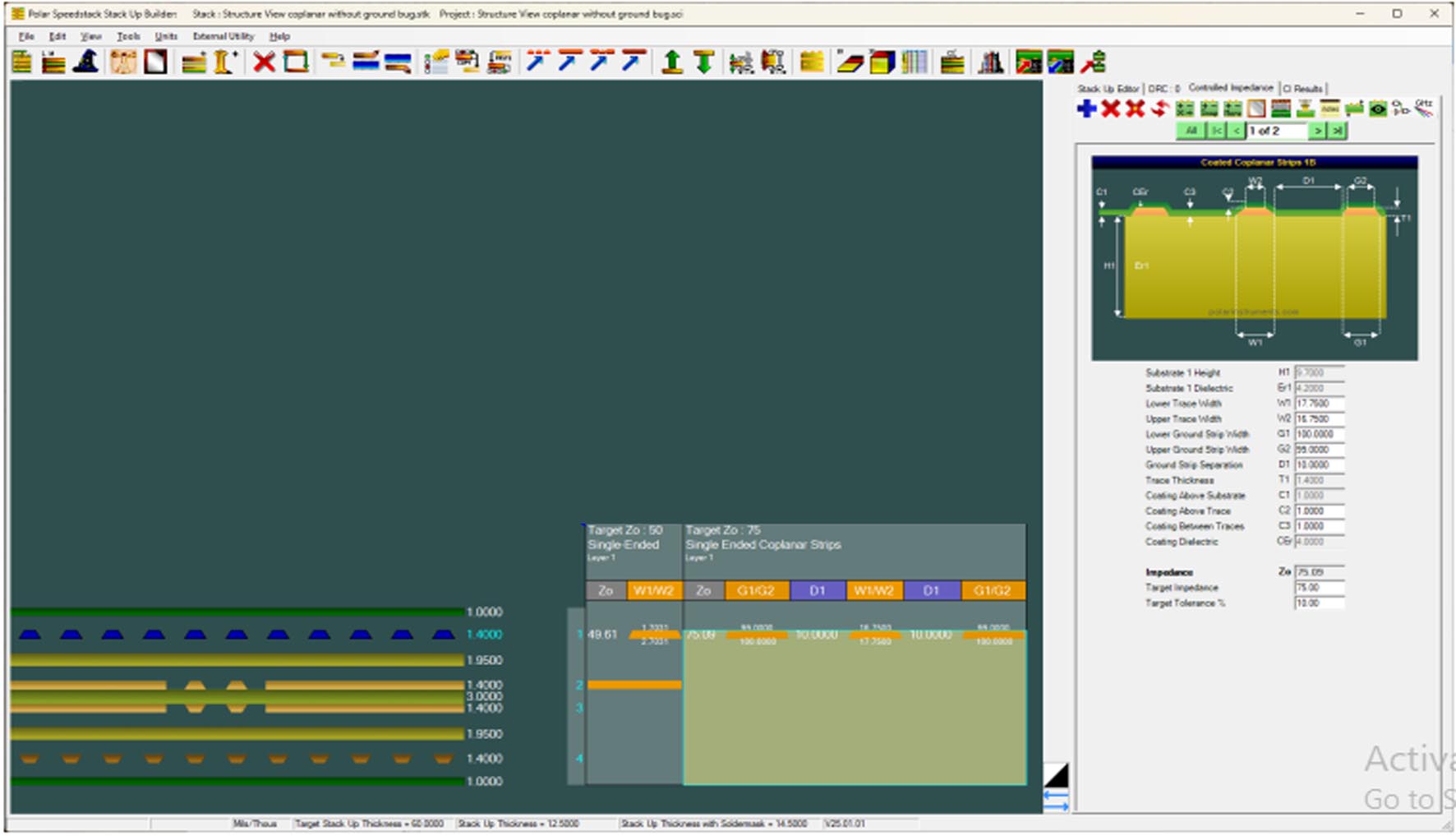
Visual Stackup Editor: Drag-and-drop interface for layer arrangement
Material Library: Extensive database of PCB materials with electrical/mechanical properties
Impedance Planning: Integrated impedance calculations with visual feedback
Design Rule Checking: Automatic checking against manufacturing constraints
Cost Optimization: Material cost analysis and optimization suggestions
Manufacturability Analysis: DFM checks for fabrication and assembly
Signal Integrity Preview: Basic SI analysis of stackup configurations
Thermal Analysis: Heat dissipation and thermal management considerations
EDA Tool Integration: Direct links to Cadence Allegro, Mentor Xpedition, Altium Designer
Fabricator Collaboration: Share stackups with PCB manufacturers for feedback
Version Control: Track changes and manage multiple stackup versions
Team Collaboration: Multi-user access with permission controls
AI Stackup Optimizer: Machine learning suggests optimal stackups based on design requirements (layer count, impedance, cost)
Smart Material Recommender: AI suggests materials based on electrical, thermal, and mechanical requirements
Predictive Manufacturing: AI predicts fabrication yield and potential issues
Generative Stackup Design: AI generates novel stackup configurations meeting complex constraints
3D Electromagnetic Integration: Preliminary 3D EM analysis of stackup configurations
Power Integrity Co-analysis: Combined power delivery network and signal integrity analysis
Thermal-Electrical Co-design: Integrated thermal and electrical performance optimization
Reliability Prediction: AI-predicted reliability under environmental stresses
Real-Time Co-design: Multiple engineers can collaborate on stackup simultaneously
Cloud-Native Platform: Full web-based version with real-time collaboration
Fabricator Portal: Dedicated portal for fabricator review and comments
Supply Chain Intelligence: Real-time material availability and lead time data
GPU-Accelerated Analysis: NVIDIA CUDA support for faster simulations
Automated Documentation: AI-generated stackup specifications and fabrication notes
Smart Import/Export: Enhanced integration with EDA and CAD tools
Mobile Review: iOS/Android apps for stackup review and approval
Minimum Requirements:
OS: Windows 10 Pro 64-bit (21H2) or Windows 11 Pro
CPU: Intel Core i5-10400 or AMD Ryzen 5 3600 (6 cores)
RAM: 16 GB (32 GB recommended for large/complex stackups)
GPU: Integrated graphics sufficient, discrete recommended for 3D views
Storage: 20 GB free SSD space
Display: 1920×1080 minimum, dual monitors recommended
Recommended Configuration:
OS: Windows 11 Pro
CPU: Intel Core i7-13700K or AMD Ryzen 7 7700X (16 threads)
RAM: 64 GB DDR5 (for complex HDI stackups with many simulations)
GPU: NVIDIA RTX 4060 Ti or better (for GPU acceleration)
Storage: 500 GB NVMe SSD + 1 TB for project archives
Network: High-speed internet for cloud features
Price: 325 $
Price Currency: $
Operating System: Windows
Application Category: Electronics








Reviews
There are no reviews yet.