












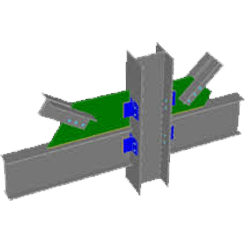


SDS2 2026 is a comprehensive steel detailing and fabrication software developed by SDS2. It is specifically utilized in the construction and steel fabrication industries for creating detailed models and fabrication drawings of steel structures. This software is designed for steel detailers, enabling them to translate architectural and engineering plans into actionable shop drawings and material lists. SDS2 2026 distinguishes itself with enhanced automation capabilities for connection design and CNC output generation.
SDS2 2026 serves as a critical tool within the structural engineering and construction sectors, facilitating the intricate process of steel detailing and fabrication. Its applications span a wide range of construction projects, from commercial buildings and industrial facilities to complex infrastructure developments like bridges and stadiums, all of which rely on precise steel components.
For steel fabricators, SDS2 2026 streamlines the process of transforming design intent into constructible elements. The software supports the generation of detailed shop drawings, material lists, and cut lists required for manufacturing steel members. Furthermore, its compatibility with CNC machinery is essential for automated fabrication processes, ensuring accuracy and efficiency in production. This direct link from design to manufacturing underscores its value in modern fabrication workflows.
SDS2 2026 offers a full suite of specialized tools for steel detailers, focusing on the creation and management of detailed steel structures. Its core functionality revolves around robust 3D structural modeling, allowing users to build virtual representations of steel frameworks with high precision. This 3D environment is integral to identifying potential clashes and conflicts early in the design process.
SDS2 2026 is engineered to integrate seamlessly within broader Building Information Modeling (BIM) workflows. This integration ensures that steel detailing data is synchronized with architectural and structural designs provided by other project stakeholders.
The software supports import and export of data using industry-standard formats such as IFC (Industry Foundation Classes) and DXF, facilitating information exchange with BIM platforms like Revit and Tekla Structures. This interoperability allows for enhanced coordination, enabling structural engineers, architects, and detailers to collaborate more effectively. By maintaining a consistent data model, SDS2 2026 helps reduce errors and improves overall project efficiency from design through to fabrication.
A key strength of SDS2 2026 lies in its ability to directly generate CNC (Computer Numerical Control) data for fabrication machinery. This capability bridges the gap between the detailing software and the automated manufacturing equipment on the shop floor.
The software can produce machine-readable files, including formats compatible with various CNC machines such as drills, saws, and plasma cutters. These outputs contain precise coordinates, tool paths, and fabrication instructions, enabling automated cutting, drilling, and coping of steel members. This direct data transfer minimizes manual transcription errors, improves the accuracy of fabricated parts, and accelerates the production cycle for steel fabricators.
The SDS2 2026 version introduces several enhancements focused on optimizing workflows and increasing automation for steel detailers and fabricators. These updates aim to address the evolving demands of the construction industry for greater precision and efficiency.
SDS2 has been utilized in numerous large-scale construction projects across various sectors, demonstrating its capability in handling complex steel detailing requirements. For instance, the software has been employed in the detailing of structural steel for major commercial developments, arenas, and significant infrastructure projects.
Companies specializing in structural steel fabrication frequently rely on SDS2 2026 for their project portfolios. These firms leverage the software’s capacity to manage intricate designs and produce precise fabrication documentation for large volumes of steel. The ability to integrate with CNC equipment and BIM platforms makes it an indispensable tool for those involved in high-profile construction and fabrication initiatives.
SDS2 2026 is particularly beneficial for complex steel structures found in commercial, industrial, and infrastructure projects where detailed steel analysis and detailing is necessary. It supports projects that require precise fabrication-ready drawings and integration with CNC machinery for manufacturing.
SDS2 2026 offers full integration with major BIM platforms, allowing for seamless coordination between structural detailing and architectural designs. This enhances collaboration among project stakeholders and facilitates improved project delivery timelines.
SDS2 stands out due to its automated connection design features and comprehensive 3D modeling capabilities. Unlike some competitors, it offers integrated CNC output generation, making it a preferred choice for steel fabricators looking for an all-in-one solution.