

Latest update
License Price
OS
SeismoTank v5.0 is a specialized software tool for the seismic analysis and design of liquid storage tanks, developed by Seismosoft—creators of the renowned SeismoStruct structural analysis software. Version 5.0 represents a significant advancement in the specialized field of tank seismicity, providing engineers with a dedicated, user-friendly platform that implements the most current analytical methods and code requirements for liquid storage vessels. The software addresses the unique challenges of tank analysis: fluid-structure interaction, sloshing effects, impulsive and convective pressure distributions, and the complex behavior of tank shells and foundations under seismic loading. Whether designing new tanks or assessing existing ones for seismic vulnerability, SeismoTank v5.0 delivers the precision, code-compliance, and engineering insight that critical infrastructure demands.
This specialized seismic engineering software is designed for:
Structural Engineers & Seismic Specialists analyzing and designing liquid storage tanks for earthquake resistance.
Civil Engineering Consultants performing seismic vulnerability assessments for industrial and municipal tanks.
Oil & Gas Engineers designing storage tanks for refineries, terminals, and pipeline facilities.
Water & Wastewater Engineers evaluating seismic safety of water storage tanks and treatment plant vessels.
Regulatory & Safety Authorities reviewing tank designs for compliance with seismic codes and standards.
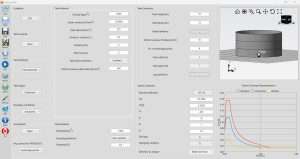
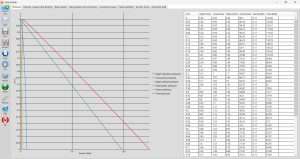
Hydrodynamic Pressure Modeling:
Accurate calculation of impulsive pressures (tank and fluid moving together)
Convective (sloshing) pressures from fluid surface oscillation
Flexible and rigid tank wall assumptions
Pressure distribution along wall height and circumference
Sloshing Analysis:
Fundamental sloshing mode characteristics
Higher mode effects when significant
Sloshing wave height calculation
Freeboard requirements for overturning prevention
Added Mass Effects:
Fluid participation in dynamic response
Effective mass distribution for impulsive and convective components
Mass participation factors for modal analysis
Supported Tank Geometries:
Circular Tanks: Above-ground, underground, elevated
Rectangular Tanks: All aspect ratios
Anchored and Unanchored: Base fixity options
Flexible and Rigid Walls: Material-dependent behavior
Support Conditions:
Ground-supported (slab or ring foundation)
Elevated (column or pedestal supported)
Buried (soil-structure interaction considerations)
Flexible base conditions (for unanchored tanks)
Equivalent Lateral Force:
Simplified method for regular tanks
Base shear and overturning moment calculation
Vertical distribution of seismic forces
Response Spectrum Analysis:
Multi-modal analysis including sloshing modes
Combination of impulsive and convective responses
CQC and SRSS modal combination rules
User-defined or code-specified spectra
Time History Analysis:
Direct integration of equations of motion
Fluid-structure interaction in time domain
Support for real and artificial accelerograms
Nonlinear behavior when applicable
International Seismic Codes:
Eurocode 8 (EN 1998-4: Silos, tanks and pipelines)
ACI 350.3 (Seismic Design of Liquid-Containing Concrete Structures)
API 650 (Welded Steel Tanks for Oil Storage) Annex E
AWWA D100 (Welded Steel Tanks for Water Storage)
IS 1893 (Indian seismic code) for tanks
NZSEE (New Zealand) guidelines
Customizable parameters for other national codes
Design Checks:
Shell stability and buckling verification
Anchor bolt and base plate design
Overturning stability (with or without anchors)
Sliding resistance
Foundation pressure checks
Freeboard adequacy for sloshing
Tank Shell Modeling:
Membrane and bending behavior
Circumferential and meridional stresses
Plastic hinging and failure mechanisms
Stiffener and ring girder effects
Foundation Interaction:
Soil-structure interaction for flexible bases
Uplift analysis for unanchored tanks
Bearing pressure distribution
Settlement effects
Roof Systems:
Fixed and floating roofs
Roof mass participation
Pressure effects on roof structure
Graphical Output:
Pressure distribution plots (impulsive/convective)
Mode shape visualization for sloshing modes
Displacement and stress contours
Time history response plots
Numerical Results:
Base shear and overturning moment
Hydrodynamic pressure coefficients
Sloshing wave height
Anchor tension forces
Shell stresses and stability checks
Report Generation:
Comprehensive calculation reports
Code compliance summaries
Design check documentation
Export to PDF and Excel
Parametric Studies:
Variation of tank dimensions and proportions
Liquid level effects (partial filling)
Soil condition sensitivity
Anchor configuration optimization
Nonlinear Analysis:
Material nonlinearity (concrete cracking, steel yielding)
Geometric nonlinearity (large displacements)
Base uplift with gap elements
Foundation nonlinear behavior
Probabilistic Assessment:
Seismic hazard integration
Fragility curve development
Risk-based design options
Price: 0 $
Price Currency: $
Operating System: Windows
Application Category: Civil Engineering
Latest update
License Price
OS




Reviews
There are no reviews yet.