
SIMULIA PowerACOUSTICS is a specialized vibro-acoustics simulation application within the broader Dassault Systèmes 3DEXPERIENCE platform. It is built on the proven Abaqus solver technology and provides a dedicated workflow for predicting and analyzing sound radiation, transmission, and absorption. Engineers use it to compute acoustic pressure fields, sound power levels, transmission loss, and psychoacoustic metrics for structures subject to mechanical or flow-induced excitations. It enables virtual prototyping of noise and vibration characteristics early in the design cycle, reducing the need for costly physical prototypes.
It is a key tool for industries where sound quality, noise compliance, and acoustic comfort are critical competitive factors.
Primary Users: Acoustics Engineers, NVH Specialists, and Design Engineers in Automotive, Aerospace, Consumer Electronics, and Appliances who need to simulate and optimize sound and vibration performance.
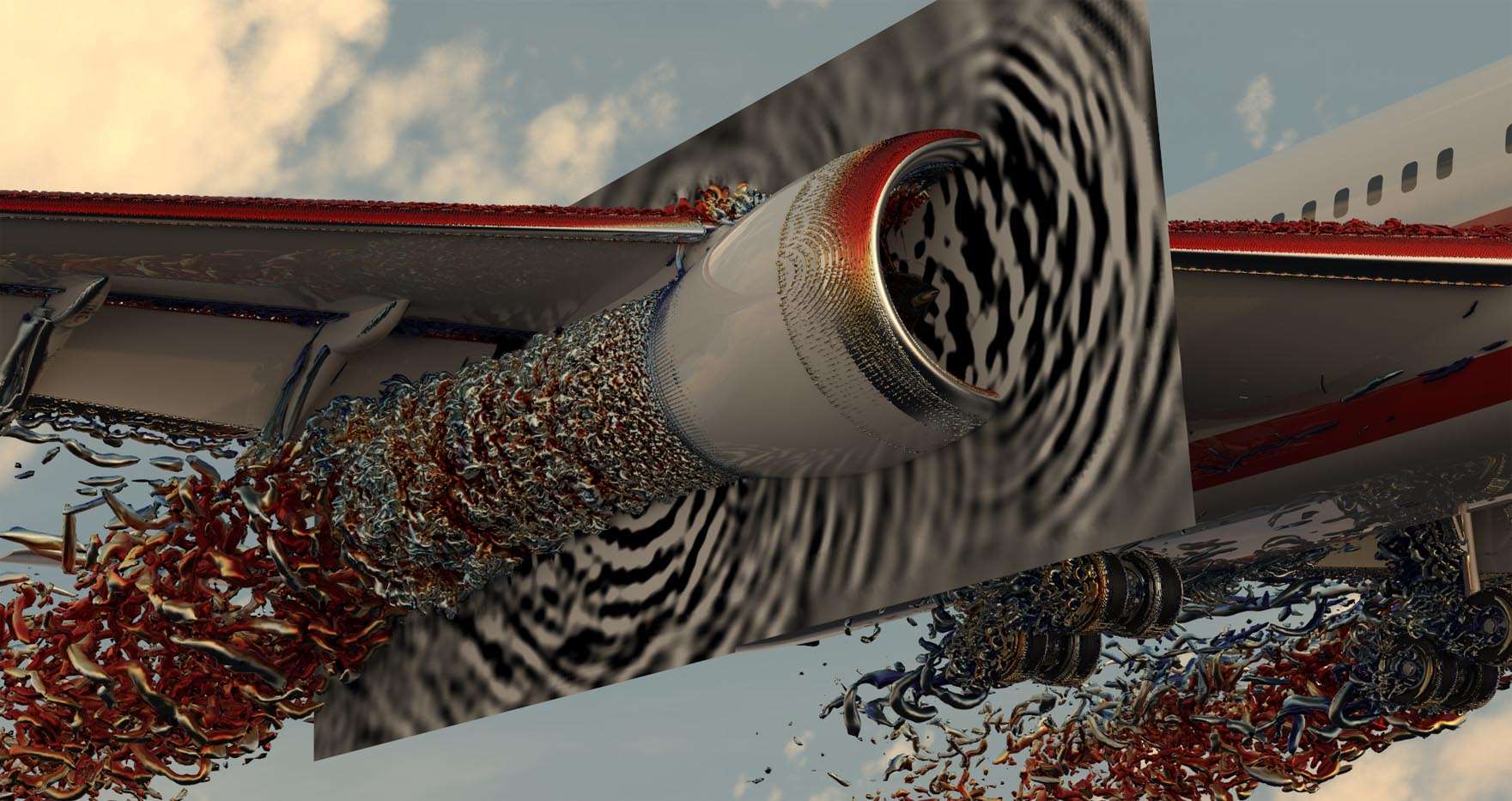
PowerACOUSTICS provides an integrated environment for solving complex coupled structural-acoustic problems.
Finite Element Method (FEM) for Acoustics:
Fluid-Structure Interaction (FSI): Fully coupled analysis where structural vibrations excite the acoustic fluid (air) and vice-versa. Essential for predicting interior cabin noise or speaker performance.
Acoustic Cavity Modes: Calculate natural frequencies and mode shapes of enclosed air volumes (e.g., vehicle interior, appliance cavity).
Boundary Element Method (BEM):
Exterior Radiation Problems: Efficiently solve for sound radiation to an unbounded domain (e.g., noise from a vibrating engine block, construction equipment). BEM is ideal for exterior problems as it doesn’t require meshing the surrounding air volume.
Advanced Analysis Types:
Frequency Response Analysis: Compute sound pressure levels over a range of frequencies due to harmonic excitation.
Random & Acoustic Response: Analyze response to random vibration inputs (e.g., road noise) or diffuse acoustic fields.
Transmission Loss: Evaluate the sound insulation performance of partitions, barriers, and enclosures.
Specialized Post-Processing & Metrics:
Sound Pressure & Power Contours: Visualize acoustic pressure fields and radiation patterns.
Psychoacoustic Metrics: Calculate loudness, sharpness, tonality, and other metrics that correlate with human perception of sound.
Sound Quality Analysis: Tools to evaluate and compare the subjective quality of sounds (e.g., vehicle door closure sound, electric motor whine).
Seamless Integration:
Native 3DEXPERIENCE Data Model: Works directly with CATIA geometry and other platform apps.
Workflow with Other SIMULIA Apps: Results from structural simulations (e.g., Abaqus) can be directly used as excitation sources for acoustic analysis.
Automotive NVH: Interior cabin noise, powertrain radiation, tire-road noise, brake squeal.
Aerospace: Cabin acoustics, jet engine fan noise, aircraft interior noise.
Consumer Electronics: Speaker/microphone design, device buzz and rattle, hearing aid acoustics.
Appliances: Noise from compressors, fans, and washing machines.
Requirements are those of the 3DEXPERIENCE platform, which are high for simulation roles.
Minimum System Requirements:
A 3DEXPERIENCE-supported OS (Windows 10/11 64-bit, or RHEL/SLES Linux), a modern multi-core Intel/AMD processor, 16 GB RAM, a professional OpenGL graphics card with 2 GB VRAM, high-speed internet connection for platform access, and substantial free disk space for local caching.
Recommended for Professional Simulation:
A high-performance workstation with Windows 10/11 Pro, an Intel Xeon W-series or Core i9/AMD Threadripper Pro CPU, 64+ GB RAM, a high-end NVIDIA RTX or Quadro GPU with 8+ GB VRAM, and fast NVMe SSDs. Access to high-performance compute (HPC) servers via the platform is typical for solving large models.
Price: 325 $
Price Currency: $
Operating System: Windows
Application Category: Mechanical Engineering












Reviews
There are no reviews yet.